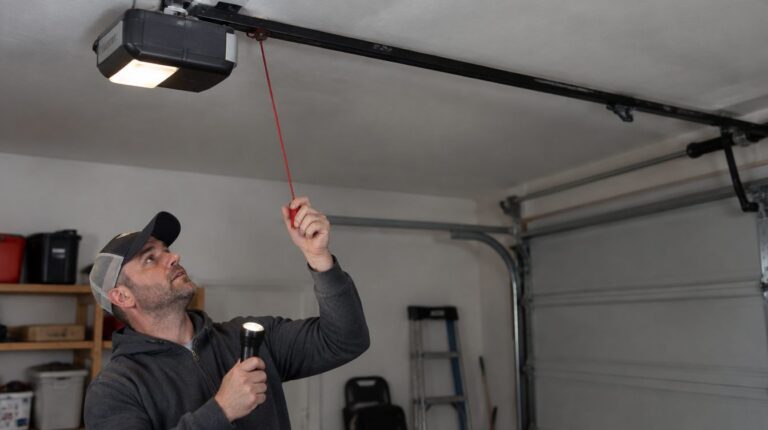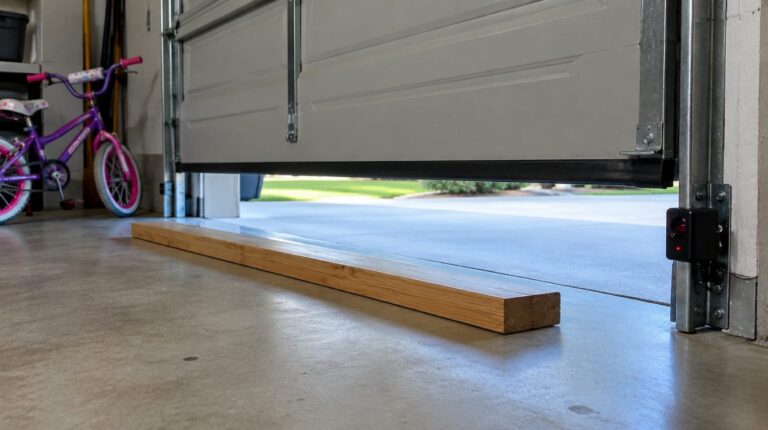

Your garage door weighs somewhere between 130 and 400 pounds, and the only reason you can lift it with one hand (or a half-horsepower opener can lift it at all) is the spring system. There are two types: torsion springs, mounted on a bar above the door, and extension springs, stretched along the horizontal tracks on either side. Most Houston homes built in the last 20 years have torsion. Many older homes in neighborhoods like Spring Branch, Pasadena, and parts of Pearland still have extension.
If you are replacing springs, buying a home, or wondering why your door feels rough, it helps to know which system you have and whether it is worth changing. Here is the practical breakdown.
How torsion springs work
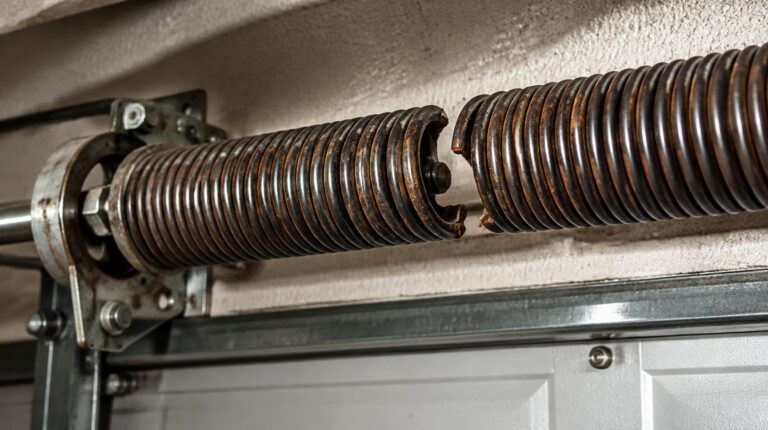
A torsion spring is a tightly wound coil mounted on a steel shaft directly above the door opening. When the door closes, the cables wind the spring up, storing energy through twisting (torsion). When the door opens, the spring unwinds and turns the drums at each end of the shaft, which pull the cables and lift the door.
Key traits:
- One or two springs, centered above the door
- Lifts the door evenly from both sides through a single shaft
- Smooth, controlled movement with less strain on the opener
- The spring stays on the shaft if it breaks; it does not fly
Torsion is the standard on nearly all new installations and on every double door, because it handles heavier weight and keeps the door balanced side to side.
How extension springs work
Extension springs are long, lighter springs that run parallel to the horizontal tracks, one on each side. They stretch when the door closes and contract when it opens, pulling through a pulley-and-cable system. Each spring works independently.
Key traits:
- Two springs, one per side, mounted along the tracks
- Requires less headroom above the door, which is why older and low-ceiling garages have them
- Cheaper parts
- Jerkier motion, and the two sides can fall out of sync over time
- A broken spring can snap across the garage unless safety cables are installed
That last point is the big one. An extension spring under full load that breaks without a safety cable becomes a projectile. Safety cables (a thin cable running through the center of the spring) are required on new extension installs and are cheap to add, but a surprising number of older Houston garages do not have them.
Safety: torsion wins clearly
Both systems hold a dangerous amount of stored energy and neither should be adjusted or replaced by a homeowner. But in terms of what happens when a spring fails:
- Torsion: the spring breaks with a loud bang, but it stays on the shaft. The door drops to closed (or stays closed) and will not open. Nothing leaves the shaft.
- Extension without safety cables: the spring can whip across the garage and hit cars, storage, walls, or a person.
- Extension with safety cables: the cable contains the broken spring. Still unpleasant, but not dangerous.
Extension systems also have more failure points: two springs, two pulleys, two sets of cables, more brackets. Each one is a place where a worn or rusted part can let go. Houston humidity speeds that corrosion up, especially near the coast in League City, Clear Lake, and Galveston.
Lifespan and performance
Springs are rated in cycles. One cycle is one open and one close.
- Standard torsion springs: typically rated for 10,000 to 15,000 cycles. For a family opening the door four to six times a day, that is roughly 5 to 8 years. High-cycle torsion springs rated for 25,000 or more cycles are available and can last well past a decade.
- Extension springs: typically rated around 10,000 cycles, but in practice they tend to wear faster because they stretch and relax over their entire length with every cycle, and because the two sides drift out of balance and overload one spring.
Beyond raw lifespan, torsion makes the door run better. It lifts evenly, so the door does not rack in the tracks, rollers and hinges wear more slowly, and the opener works less hard. If your extension-spring door shudders, bounces at the bottom, or sits crooked when half open, the springs are the likely reason.
Houston factor: humidity shortens the life of both types. Galvanized or powder-coated springs cost a little more and hold up noticeably better here.
Cost in Houston (2026)
Here is what most homeowners in the Houston area pay for spring work, parts and labor included:
- Extension spring replacement (pair): typically $150 to $300. Safety cables are often added for a small additional charge if missing.
- Torsion spring replacement (pair): typically $250 to $450 for standard springs; high-cycle or oversized springs for heavy doors run higher.
- Extension-to-torsion conversion: typically $400 to $750, since it involves a new shaft, drums, cables, bearing plates, and springs, plus removing the old hardware.
Extension springs are cheaper per visit. Torsion springs cost more up front but typically last longer, protect the opener and door hardware, and reduce repeat service calls.
When to convert from extension to torsion
You do not have to convert just because you have extension springs. If they are in good shape, have safety cables, and the door runs smoothly, leave them alone. But a conversion is a smart move when:
- The extension springs have failed anyway. If you are already paying for spring work, the incremental cost to convert is the best time to do it.
- You are installing a new opener. A balanced torsion door is easier on a new motor and helps the opener last.
- You are replacing the door. Almost every new door is designed for torsion.
- The door is heavy (insulated, wood, double-wide). Extension springs struggle with weight, and torsion handles it.
- You have had repeat problems with cables jumping, doors sitting crooked, or one side hanging low.
- You are selling the home. Inspectors regularly flag extension springs without safety cables, and a torsion system is a small selling point.
The one real obstacle is headroom. Standard torsion needs about 12 inches of clearance above the door opening. If your garage has less, a low-headroom torsion kit or a rear-mount torsion setup can usually solve it, and a technician can tell you in a few minutes whether your garage qualifies.
Want to know which system you have and whether a conversion makes sense for your garage? Call 713-598-3837 (Houston) or 281-800-5387 (Clear Lake), or request a free quote.
Frequently asked questions
How do I tell which type of spring I have?
Look above the door with it closed. If you see a horizontal steel bar with one or two thick coiled springs on it, that is torsion. If you see long, skinny springs stretched along the tracks on each side of the door, those are extension.
Can I replace just the broken spring?
You can, but it is rarely a good idea. Springs on the same door have the same number of cycles on them, so the second one is usually close to failing. Replacing both keeps the door balanced and saves a second service call.
Are torsion springs safe to replace myself?
No. Winding a torsion spring requires the correct winding bars and technique, and a mistake can cause serious injury. Extension springs are not safe for DIY either; the door must be fully open and properly clamped before any tension is released. This is one job worth paying for.
Does an extension-to-torsion conversion require a new opener?
Usually not. If the existing opener works, it stays. In fact, it will have an easier job after the conversion because the door will be properly balanced.
Related guides
- Garage Door Spring Repair Cost
- How Long Do Garage Door Springs Last?
- Broken Garage Door Spring: Safe Repairs
Get same-day spring repair or conversion in Houston
BBM Garage Doors replaces torsion and extension springs and performs extension-to-torsion conversions across Houston, Katy, Cypress, Spring, The Woodlands, Pearland, Sugar Land, League City, Clear Lake, Pasadena, Friendswood, Missouri City, Galveston, and surrounding areas. Same-day service and 24/7 emergency repair are available. Call 713-598-3837 (Houston) or 281-800-5387 (Clear Lake), or visit our garage door repair page to learn more.