
Your garage door is the largest moving part of your home, and in Houston it works in some of the toughest conditions in the country. Months of triple-digit heat index, humidity that never really lets up, a six-month hurricane season, and the occasional hard freeze all push on the same springs, rollers, seals and electronics every single day.
The good news is that most weather-related garage door problems are predictable. If you know what each season does to your door, you can stay ahead of it with a few minutes of attention a few times a year. This guide walks through how Houston’s climate affects your garage door and gives you a season-by-season checklist you can actually follow.
What summer heat does to your garage door
A closed garage on a July afternoon in Houston can easily run hotter than the air outside, and a metal door facing west absorbs a lot of that heat. Here’s what that means in practice:
- Metal expands. Steel panels, tracks and hinges all grow slightly in the heat. A door that was adjusted tight in the spring can start to rub, bind or sound louder by midsummer.
- Lubricant breaks down. Heat thins out grease and dries out cheap spray lubricants, so rollers and hinges start squeaking sooner than they would in a milder climate.
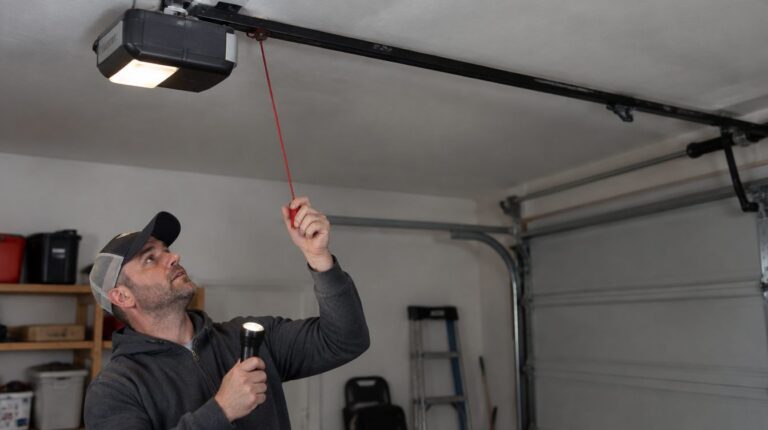
- Opener electronics suffer. The logic board, capacitor and motor in your opener are mounted at the ceiling, which is the hottest spot in the garage. Heat is one of the most common reasons we see openers fail in August and September rather than in winter.
Key takeaway: If your door gets noisier or your opener gets flaky in late summer, heat is usually the trigger. Lubricate early in the season and keep the garage ventilated when you can.
Humidity, rust and corrosion
Houston humidity is the slow, quiet enemy of your garage door. It doesn’t break anything overnight, but it shortens the life of almost every metal part.
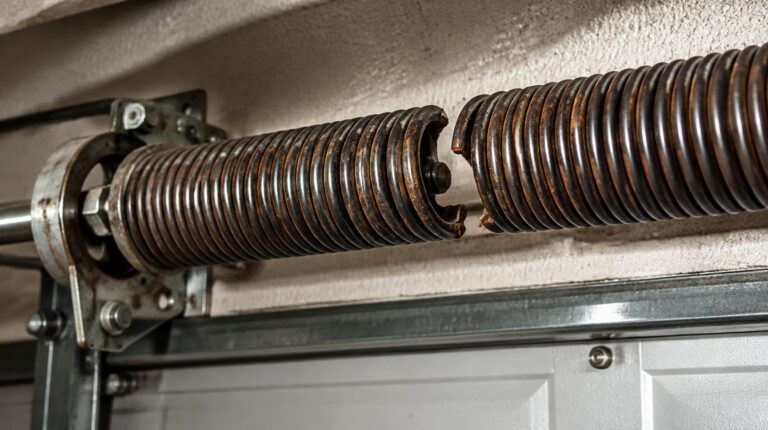
- Springs develop surface rust, which creates weak points and causes them to break earlier than their rated cycle life.
- Cables fray at the bottom drums where moisture collects, especially on doors near the coast in Clear Lake, League City and Galveston.
- Bottom brackets and track bolts corrode, and a corroded bottom bracket is a safety issue because it anchors the cable under tension.
- Photo-eye sensors can fog or collect condensation on the lens, causing the door to reverse for no obvious reason.
A light coat of silicone or lithium garage door lubricant on springs, hinges and rollers every three to four months goes a long way. Avoid WD-40 as a lubricant; it displaces moisture but doesn’t protect metal for long.
Hurricane season prep (June through November)
The garage door is the biggest opening in your house, and when it fails in a storm, wind pressure gets inside and can lift the roof. Hurricane prep isn’t just about the door surviving; it’s about the whole house.
- Check the wind rating. If your door is more than 15 years old or you’re not sure it’s wind-rated, have it inspected before the season starts. Our guide to hurricane-rated garage doors in Houston covers what to look for.
- Tighten hardware. Loose track brackets and hinge bolts are the first things to go under wind load.
- Know your manual release. Power outages are common after a storm. Make sure you can disengage the opener and lift the door by hand.
- Keep the door closed and locked during a storm. If you have a manual slide lock, use it. Never open the door to “check” on things while winds are up.
- After the storm, look for bent panels, tracks that shifted, and debris in the track before running the opener.
The rare Houston freeze
It doesn’t happen often, but when temperatures drop into the 20s, Houston garage doors have problems the rest of the year never shows. Cold makes steel springs brittle, and a spring that was already near the end of its life is far more likely to snap on a freezing morning. We consistently see a spike in spring calls in the two or three days after a hard freeze.
Also watch for the bottom seal freezing to the slab (free it before running the opener) and for a door that strains or stops partway up. A straining opener on a broken spring will burn out the motor.
If you hear a loud bang from the garage on a cold morning, that’s almost always a spring. Our spring repair service is same-day across the Houston area.
Season-by-season garage door checklist
Spring (March to May)
- Lubricate springs, rollers, hinges and bearings
- Run the balance test: disengage the opener and lift the door halfway; it should stay put
- Clean photo-eye lenses and check alignment
- Inspect weather seals before the heavy rain season
Summer (June to August)
- Replace remote and keypad batteries
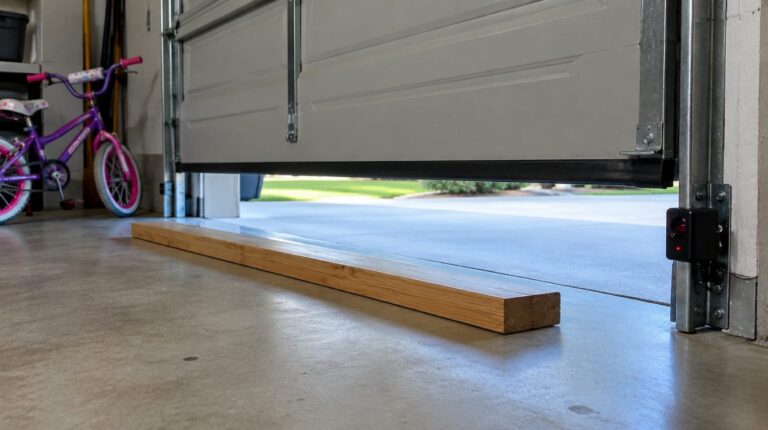
- Test the auto-reverse with a 2×4 under the door
- Tighten track and hinge hardware ahead of hurricane season
- Confirm you can operate the manual release
Fall (September to November)
- Look for rust on springs, cables and bottom brackets after the wettest months
- Check the door for post-storm panel or track damage
- Lubricate again before the cooler weather
Winter (December to February)
- Listen for new noises on cold mornings
- Check the bottom seal for cracks or gaps
- If a freeze is forecast and your springs are 7+ years old, consider a pre-emptive inspection
Not sure where to start, or noticed something that doesn’t look right? Call 713-598-3837 (Houston) or 281-800-5387 (Clear Lake), or request a free quote.
When weather damage needs a professional: lubricating and tightening is homeowner territory. Anything involving springs, cables, bottom brackets, or a door that has come off its track is not. Those parts are under enough tension to cause serious injury, and a professional repair in Houston is affordable enough that the risk isn’t worth it. Most homeowners pay in the range of $180 to $400 for a spring replacement and $150 to $300 for a cable repair, depending on the door and parts. A heat-related opener failure typically runs $150 to $350 to repair, or $450 to $900 for a new opener installed.
Frequently asked questions
Does Houston humidity really shorten garage door spring life?
Yes. Springs are rated by cycles, but rust creates stress points that cause them to fail before they reach that count. Regular lubrication and keeping the garage reasonably dry both help.
Should I leave my garage door slightly open in the heat to ventilate?
We don’t recommend it. It invites pests and security problems, and a partially open door puts uneven load on the springs. A vent, fan or insulated door is a better way to manage heat.
Is an insulated garage door worth it in Houston?
For attached garages, usually yes. It keeps the garage cooler, which protects the opener and anything you store there. Our guide on garage door insulation in Houston goes into the details.
How often should I lubricate my garage door in Houston?
Every three to four months is a good rhythm here, versus once or twice a year in drier climates. Heat and humidity both work against lubricant.
Related guides
- Garage Door Maintenance Tips for Houston Homeowners
- Hurricane-Rated Garage Doors in Houston
- How Long Do Garage Door Springs Last?
Get same-day garage door repair in Houston
Whether it’s a spring that snapped after a freeze, an opener that gave out in the August heat, or storm damage you need handled fast, BBM Garage Doors offers same-day and 24/7 emergency service across Houston, Katy, Cypress, Spring, The Woodlands, Pearland, Sugar Land, League City, Clear Lake, Pasadena, Friendswood, Missouri City and Galveston. Call 713-598-3837 (Houston) or 281-800-5387 (Clear Lake), or learn more about our garage door repair services.