
You press the button, the door starts down, and then it stops and rolls right back up. Maybe it gets all the way to the floor first, maybe it reverses halfway. Either way, you’re standing in the driveway with a garage that won’t close, and in Houston that means an open invitation to heat, rain and anyone walking by.
The good news is that a door reversing on the way down is usually the opener doing exactly what it’s designed to do: it thinks something is in the way or something is wrong. The job is figuring out what triggered it. Here are the five causes we see most often, roughly in order of how likely they are, and which ones you can safely handle yourself.
1. Photo-eye sensors are misaligned or blocked
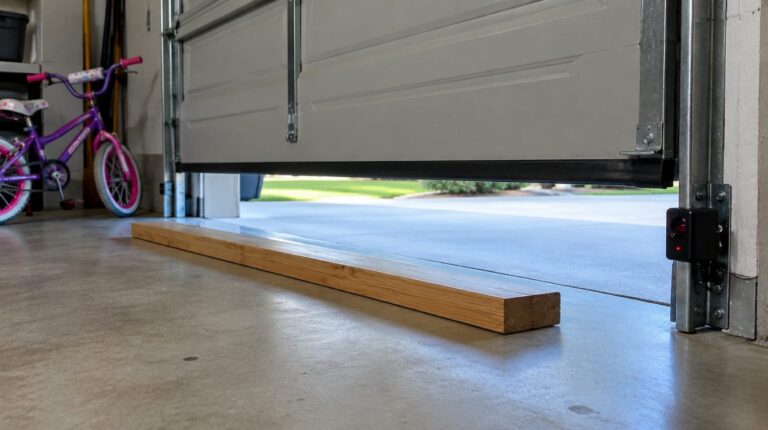
This is the number one cause, and it’s the first thing to check. The two small sensors mounted near the floor on each side of the door opening send an invisible beam across the doorway. If the beam is broken or the sensors can’t “see” each other, the door refuses to close or reverses immediately.
Things that break the beam in a typical Houston garage:
- A lawn mower, trash can, bike or box sitting in the doorway
- Dirt, spider webs or condensation on the sensor lens (humidity is rough on these)
- One sensor bumped out of alignment by a car tire or a broom
- Direct afternoon sunlight hitting the receiving sensor, which happens with west-facing garages
Safe DIY: Yes. Clear the doorway, wipe both lenses with a soft cloth and check the indicator lights. On most brands, both sensors should show a steady light. A blinking or dark light means they’re not aligned. Gently bend the bracket until the light goes solid. If sunlight is the problem, a small cardboard shade over the sensor often solves it.
2. Close-force or travel limits are set wrong
Your opener has two adjustments that control the closing cycle. The travel limit tells the motor how far to run before it considers the door closed. The close force tells it how much resistance to tolerate before it assumes it hit something and reverses.
If the travel limit is set too far, the door hits the floor before the motor thinks it’s done, senses resistance and reverses. If the close force is set too low, normal friction from the tracks is enough to trip the reversal. These settings drift over time, and they’re a common culprit after a new weather seal is installed or the floor is resurfaced.
Safe DIY: Usually. Most openers have adjustment dials or buttons on the motor housing, and the manual explains the procedure. Make small changes and test after each one. Where we urge caution: don’t crank the close force up to “solve” a reversal. That defeats the safety feature, and a door that no longer reverses on contact is dangerous. If a small adjustment doesn’t fix it, something else is causing the resistance.
3. Something is physically obstructing the door
Beyond the photo eyes, the door itself can hit something on the way down. Check the bottom seal for debris, look at the tracks for a stray rock or screw, and make sure nothing is leaning against the inside of the door. A rolled-up hose or a storage bin that has shifted into the door path is a classic one.
Safe DIY: Yes. This is a quick visual check. Clear whatever is in the way and try again.
4. Track problems: bent, dirty or out of alignment
When the door binds in the track, the opener feels the extra resistance and reverses. Causes include a track that has been bent by a car bumper, loose track brackets, rollers that have worn down or seized, or a buildup of old grease and grit. In Houston’s humidity, tracks that haven’t been cleaned in years can develop corrosion that creates drag.
Safe DIY: Partially. You can wipe down the tracks with a rag and apply a silicone-based garage door lubricant to the rollers and hinges (not the tracks themselves, and never WD-40 as a lubricant). You can also tighten loose bracket bolts. What you should not do is try to bend a track back into shape or move a track bracket while the door is under tension. A door that has come off its track can fall, and that is a job for a technician.
5. A broken or worn spring
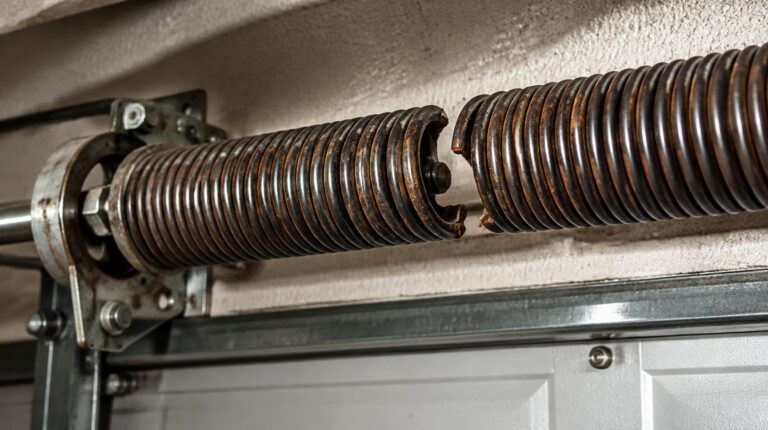
This is the cause most people don’t expect. The torsion spring above the door does most of the lifting, and the opener is only meant to guide a balanced door. When a spring breaks or loses tension, the door becomes very heavy. On the way down, it can drop faster than the motor expects, or on the way up the strain can trigger a reversal. Some openers also reverse on close because the unbalanced door is jerking in the track.
Signs the spring is the problem: a loud bang from the garage recently, a visible gap in the spring coil, a door that feels extremely heavy when you lift it by hand, or a door that won’t stay halfway open when disconnected from the opener.
Safe DIY: No. Torsion springs are under hundreds of pounds of tension and cause serious injuries every year. Do not attempt to adjust or replace one. Stop using the opener, leave the door where it is and call a professional. In Houston in 2026, spring replacement typically runs between $200 and $400 for a single spring, including labor, and it’s a same-day repair.
A quick diagnostic checklist
Work through these in order before calling anyone:
- Clear the doorway and clean both photo-eye lenses. Check that both lights are solid.
- Look along the tracks and the floor for any obstruction.
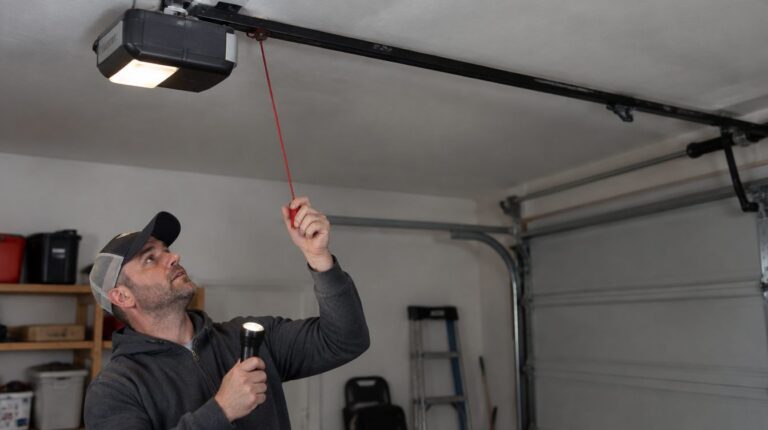
- Pull the manual release cord (only with the door fully closed) and lift the door by hand. It should feel light and stay put halfway. If it’s heavy or drops, stop here and call us.
- If the door is balanced, try a small travel-limit or close-force adjustment per your manual.
- Lubricate rollers and hinges if the door seems to drag.
If you’ve done all of that and the door still reverses, the opener’s logic board or internal sensing may be failing, which needs a technician with the right diagnostic tools. Call 713-598-3837 (Houston) or 281-800-5387 (Clear Lake), or request a free quote.
Frequently asked questions
Why does my garage door close and then immediately open again?
Nine times out of ten, that’s a photo-eye issue or a travel limit set slightly too far. The door reaches the floor, the motor senses it’s still pushing and reverses. Check the sensors first, then adjust the down limit a small amount.
Can I just hold the wall button down to force the door closed?
On most openers, holding the wall button overrides the photo eyes and closes the door. It’s fine as a one-time workaround to secure the house, but don’t make a habit of it. You’re bypassing the safety system, and if the real cause is a spring or track issue, forcing the door can make the damage worse.
Does Houston weather really affect garage door sensors?
Yes. Humidity fogs the lenses, afternoon sun blinds west-facing sensors and storms knock brackets out of alignment. If your door only acts up at certain times of day or after rain, the sensors are the likely cause.
How much does it cost to have a technician diagnose a reversing door?
Most Houston companies, including us, charge a service call fee that’s applied toward the repair if you go ahead with the work. Simple sensor realignments and limit adjustments are often done for the service fee alone. We’ll give you the price before touching anything.
Related guides
- Garage Door Sensor Not Working?
- Why Won’t My Garage Door Close?
- Broken Garage Door Spring: Safe Repairs
Get same-day garage door repair in Houston
If your door won’t stay closed and the quick checks didn’t solve it, BBM Garage Doors can usually have a technician out the same day across Houston, Katy, Cypress, Spring, The Woodlands, Pearland, Sugar Land, League City, Clear Lake, Pasadena and Friendswood. Call 713-598-3837 (Houston) or 281-800-5387 (Clear Lake), or visit our garage door repair page to learn more.