
A garage door weighs anywhere from 130 to over 400 pounds, and it moves on springs holding hundreds of pounds of tension. It’s the heaviest moving object in most homes, and the vast majority of them run for years without hurting anyone because the built-in safety systems work. The key word is “work.” Those systems need to be tested now and then, and homeowners need to know a few rules that aren’t obvious until something goes wrong.
This guide covers the safety checks and habits every Houston homeowner should know. None of them take more than a few minutes, and a couple of them could prevent a serious injury.
The monthly auto-reverse test
Every opener made since 1993 is required to reverse if it hits something while closing. That feature only matters if it’s still working, and the force setting drifts over time, especially in Houston heat where the opener’s components expand and contract.
- Lay a 2×4 board flat on the floor in the center of the door opening.
- Close the door with the remote or wall button.
- When the door touches the board, it should reverse within about two seconds and go back up.
If the door stops on the board, pushes against it, or keeps closing, the force setting is too high or the opener’s safety circuit has a problem. Don’t keep using the door until it’s fixed. On most openers the down-force is an adjustment dial or button on the motor unit, but if you’re not comfortable with it, our opener repair team can calibrate it quickly.
The photo-eye test
The two small sensors near the floor on either side of the door send an invisible beam across the opening. If anything breaks the beam while the door is closing, it reverses. This is the system that protects a child or pet who runs under the door at the last second.
To test it: start closing the door, then wave a broom handle or your foot through the beam path. The door should immediately reverse. If it doesn’t, check that both sensors have a solid indicator light (usually one green, one amber), that the lenses are clean, and that nothing has knocked them out of alignment. Houston humidity and spider webs are the two most common reasons sensors act up. We have a full walkthrough in our guide on fixing garage door sensors.
Key takeaway: Do both tests on the same day each month. It takes five minutes and covers the two most important safety systems your door has.
Kids and pets around the garage door
Most garage door injuries to children happen in one of three ways: racing under a closing door, playing with the remote, or getting fingers caught between panels. A few house rules go a long way:
- Keep remotes out of reach and off the kids’ key rings. Treat the opener like a power tool, not a toy.
- Mount the wall button at least five feet off the floor, where small children can’t reach it, and where whoever presses it can see the door.
- Teach kids to never run under a moving door, even if it “always stops.”
- Never let anyone, child or adult, ride the door up as a game. It’s a real thing people do, and it’s how fingers and hands get crushed.
Never touch the springs, cables or bottom brackets
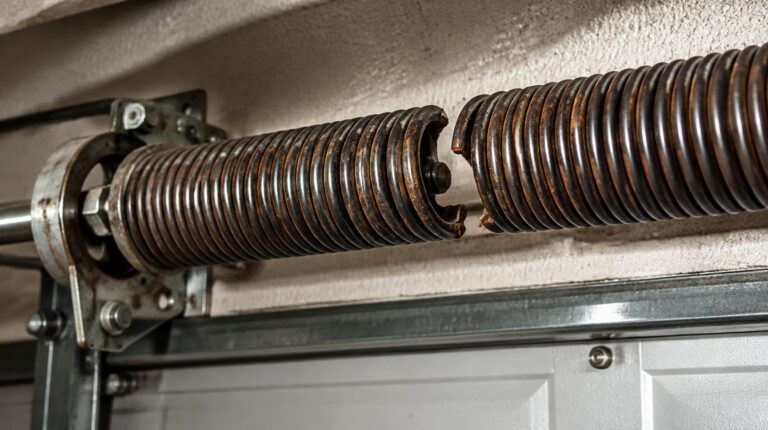
This is the one rule that matters most. Torsion springs (the coiled spring above the door) and extension springs (the long springs along the tracks) store enough energy to lift a 300-pound door. When they release that energy unexpectedly, they can break bones, cause serious lacerations, or worse. The cables and the bottom brackets they attach to are under the same tension.
Warning signs that something in the spring system has failed:
- A loud bang from the garage when nobody was using the door
- A visible gap in the torsion spring coil
- The door is crooked, or one side is higher than the other
- A cable hanging loose or wrapped around the drum
- The opener strains and the door lifts only a few inches
If you see any of these, stop using the door, keep people and cars out from under it, and call a professional. Spring replacement in Houston typically runs $180 to $400, which is a small price next to an emergency room visit. Our guide on broken garage door springs explains what to expect.
Not sure if what you’re seeing is dangerous? Call 713-598-3837 (Houston) or 281-800-5387 (Clear Lake), or request a free quote.
Know how to use the manual release
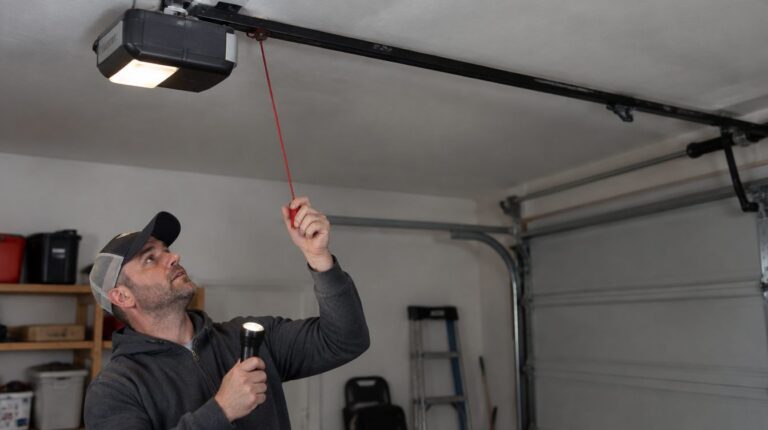
The red cord hanging from the opener rail disengages the door from the opener so you can lift it by hand. Every adult in the house should know how to use it, because you’ll need it during a power outage, which in Houston usually means during or after a storm.
Two safety rules apply:
- Only pull the release when the door is fully closed. If the door is open and the spring is weak or broken, releasing the opener can let the door slam down.
- Lift with your legs and keep your hands on the door, not the track or rollers. A properly balanced door lifts easily. If it feels like dead weight, the springs need attention.
Our post on what to do when the door won’t open after a power outage covers this step by step.
Watch the pinch points. Sectional garage doors have hinges between every panel, and those joints close on each other as the door moves. If you ever operate the door manually, place your hands on the handles or the flat face of the door, never on the seams between panels. The same applies to the track area, where rollers can catch a finger.
Vacation and security habits
The garage is one of the most common entry points for break-ins, and a few habits close the gap:
- Use the opener’s vacation or lock mode when you’re away. It disables remotes so a stolen or cloned signal can’t open the door.
- Don’t leave the remote clipped to a visor in a car parked outside. Thieves know to check there.
- Zip-tie the manual release lever loosely so it can’t be fished through the top of the door with a coat hanger, but make sure you can still break the tie in an emergency.
- A smart opener lets you check from your phone whether you left the door open. Our review of smart garage door hubs covers the options.
Frequently asked questions
How often should I test my garage door safety features?
Once a month for the auto-reverse and photo-eye tests, and a visual check of springs and cables any time you’re in the garage. It only takes a few minutes.
My garage door reverses on its own with nothing in the way. Is that a safety problem?
It usually means the photo eyes are misaligned or dirty, or the force setting is too sensitive. It’s annoying rather than dangerous, but it should be fixed because people tend to respond by disabling or bypassing the sensors, which is dangerous.
Can I replace a garage door spring myself if I watch a video?
We strongly advise against it. The tools and the technique look simple, but the tension is unforgiving and mistakes happen fast. Professional spring replacement is affordable and same-day across Houston.
What should I do if the door closes on my car or something else?
Stop, check for damage to the bottom panel and tracks, and run the auto-reverse test before using the door again. If the door hit something without reversing, the safety system needs attention.
Related guides
- The Risks of DIY Garage Door Repairs
- Garage Door Sensor Not Working?
- Garage Door Maintenance Tips for Houston Homeowners
Get same-day garage door repair in Houston
If a safety test fails, a spring breaks, or your door just doesn’t feel right, don’t put it off. BBM Garage Doors offers same-day and 24/7 emergency service across Houston, Katy, Cypress, Spring, The Woodlands, Pearland, Sugar Land, League City, Clear Lake, Pasadena, Friendswood, Missouri City and Galveston. Call 713-598-3837 (Houston) or 281-800-5387 (Clear Lake), or learn more about our garage door repair services.