
A garage door repair warranty is one of those things nobody reads until something breaks again. Then it matters a lot. A spring that fails six months after replacement, an opener board that dies the following summer, a panel that starts to delaminate after one humid Houston season: whether you pay again depends entirely on what was promised in writing the first time.
This guide explains how garage door warranties actually work, what reasonable coverage looks like for springs, openers, and full doors, what can void a warranty, and the questions worth asking before you sign off on any repair.
Parts warranty vs. labor warranty
Most homeowners assume “warranty” means one thing. In the garage door business it almost always means two separate things, and the difference matters.
- Parts warranty comes from the manufacturer. It covers the physical component (the spring, the opener motor, the door sections) against defects. If the part fails, the manufacturer supplies a replacement. It does not pay anyone to install it.
- Labor warranty comes from the repair company. It covers the work of installing the part. If the installation was done wrong, or the part fails within the labor warranty window, the company comes back and fixes it at no charge.
The gap between the two is where homeowners get caught. An opener might carry a 10-year motor warranty, but if the installer only offered 90 days of labor, you will pay a service call and installation to swap that motor in year three. Always ask about both, and get both in writing.
Typical warranty lengths in Houston
Warranty terms vary by company and by the grade of parts installed, but here is what Houston homeowners typically see in 2026:
Springs
- Standard torsion springs: typically 1 to 3 years on parts, with labor warranties ranging from 90 days to 1 year.
- High-cycle or upgraded springs: often 5 years to lifetime on parts. These cost more up front but make sense if you open the door many times a day.
- Be aware that “lifetime” on a spring usually means the life of the spring rating, not the life of your house, and it often excludes labor after the first year.
Openers
- Motor: many LiftMaster and Chamberlain models carry a lifetime motor warranty, but terms vary by model, so check the warranty sheet for yours.
- Parts (logic board, gear, rail, accessories): typically 1 to 5 years depending on the model.
- Labor: typically 1 year from the installing company, sometimes 90 days for budget installs.
Full doors
- Steel door sections: commonly 10 years to limited lifetime against rust-through and delamination from the manufacturer.
- Paint and finish: often 5 to 10 years, with exclusions for coastal exposure.
- Hardware (hinges, rollers, tracks): typically 1 to 3 years.
- Installation labor: typically 1 year.
Cables, rollers, and small repairs usually carry a shorter labor warranty, often 90 days to 1 year. That is reasonable. What is not reasonable is no warranty at all.
What voids a garage door warranty
Warranties come with conditions. Most of them are sensible, but a few catch homeowners by surprise.
- DIY adjustments. If you or a handyman adjusts the spring tension, swaps a cable, or rewires the opener, most companies will consider the labor warranty void. Manufacturers often take the same view on parts.
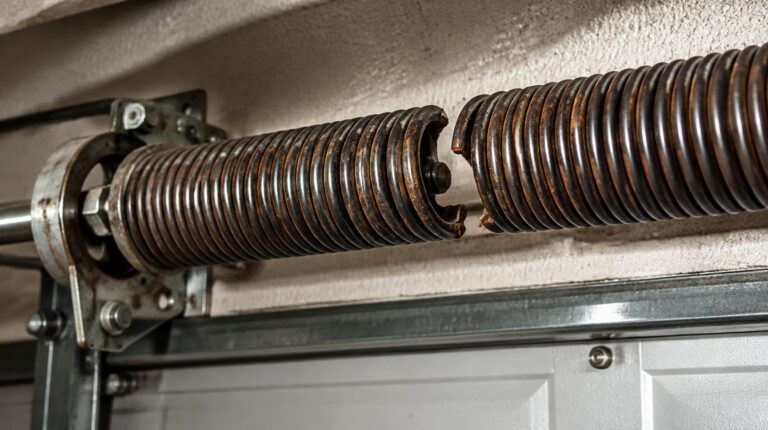
- Lack of maintenance. Some manufacturer warranties on doors and springs require periodic lubrication and inspection. If a spring fails and shows heavy rust from neglect, the claim may be denied.
- Impact damage. Backing into the door, a tree limb in a storm, or a basketball through a panel is not a defect. That is a homeowners insurance question, not a warranty question.
- Mismatched or incorrect parts. If a previous company installed the wrong spring size and the new company only replaced the opener, the opener warranty may not cover failures caused by an unbalanced door.
- Coastal or salt-air exclusions. This one matters for Galveston, Clear Lake, League City, and anyone near the water. Many finish and rust warranties have reduced terms or outright exclusions within a certain distance of the coast. Ask.
- Commercial use of a residential product. A residential opener installed on a door that cycles 50 times a day at a business will wear out early, and the manufacturer will not cover it.
Why Houston’s climate makes the warranty matter more
A spring in Phoenix and a spring in Pasadena, Texas are not living the same life. Houston’s humidity accelerates corrosion on springs, cables, and hinges. Summer heat in an uninsulated garage can push opener electronics past their comfort zone. Hurricane season brings wind loading that stresses panels and tracks.
That means parts fail somewhat earlier here than the national averages suggest, and a solid labor warranty from a local company is worth more than it would be elsewhere. It also means you should ask specifically whether the parts being installed are galvanized or coated for humid climates, since those tend to last longer and sometimes carry better coverage.
Not sure what your current warranty covers, or want a repair that comes with one in writing? Call 713-598-3837 (Houston) or 281-800-5387 (Clear Lake), or request a free quote.
Questions to ask before you approve a repair
Five questions, two minutes, and you will know exactly where you stand:
- What is the parts warranty, and who backs it? You want the manufacturer’s name and the term.
- What is your labor warranty? Get the number of days or years.
- Is the warranty in writing on my invoice? If it is not on paper, it does not exist.
- What would void it? A straight answer here tells you the company has thought about it.
- If something fails, is there a service call fee to come back? Some companies waive it during the labor warranty; some do not. Know before you need it.
Keep your invoice. Take a photo of it and save it somewhere you can find it in two years. If the opener dies, the first thing any company will ask for is proof of when it was installed and by whom.
Frequently asked questions
Does a garage door warranty transfer when I sell my house?
Manufacturer warranties on doors and openers often transfer to a new owner, sometimes with reduced terms. Labor warranties from the installing company usually do not. Check the paperwork and ask the installer.
Is a “lifetime” spring warranty really lifetime?
Usually it covers the spring part against breakage for as long as you own the home, but labor is typically only covered for the first year. After that you pay for the service call and installation, and the replacement spring itself is free.
What if the company that did my repair has gone out of business?
The labor warranty is gone, unfortunately. The manufacturer parts warranty should still apply, and another company can often process the claim for you, though you will pay for labor.
Do I need to register my opener to activate the warranty?
For most major brands, registration is recommended but not required; your dated invoice serves as proof of purchase. Registering does make claims smoother, so it is worth the five minutes.
Related guides
- How Long Do Garage Door Springs Last?
- Garage Door Opener Repair & Replacement Cost
- Garage Door Maintenance Tips for Houston Homeowners
Get same-day garage door repair in Houston, backed in writing
Every repair BBM Garage Doors completes comes with a written warranty on parts and labor, and we install components chosen for Houston’s humidity. We serve Houston, Katy, Cypress, Spring, The Woodlands, Pearland, Sugar Land, League City, Clear Lake, Pasadena, Friendswood, Missouri City, Galveston, and nearby communities with same-day and 24/7 emergency service. Call 713-598-3837 (Houston) or 281-800-5387 (Clear Lake), or see our garage door repair services.