
Most garage doors get zero attention until the day they stop working. That is unfortunate, because a garage door is a mechanical system with springs, cables, rollers, and a motor, and like any mechanical system it wears predictably. A short annual inspection catches most of that wear while it is still a cheap adjustment rather than an expensive emergency.
If you have ever wondered what a technician actually does during a “tune-up,” how often your door needs one in Houston’s climate, and whether a maintenance plan is worth it, this guide walks through all of it.
What a professional garage door inspection covers
A proper inspection is not a quick glance and a spray of lubricant. A thorough technician works through the entire system. Here is the checklist we follow on every tune-up visit:
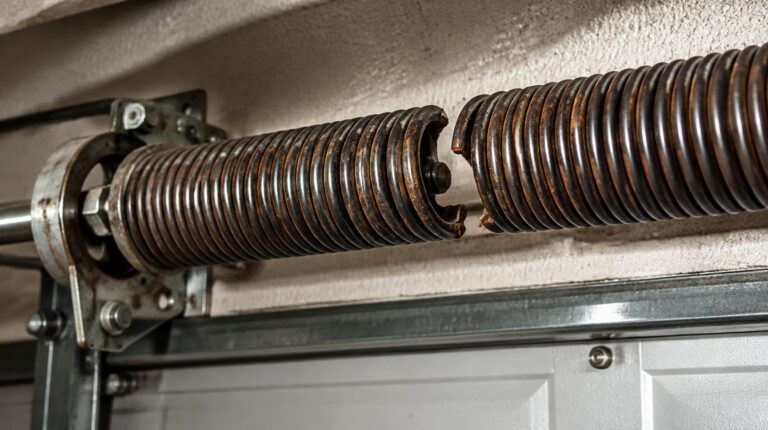
- Springs. Check for gaps, rust, and stretched coils. Measure and adjust tension so the door balances properly. Note the approximate cycle count and remaining life.
- Cables and drums. Look for fraying, rust, and uneven winding on the drums. Confirm both cables carry equal tension.
- Rollers and hinges. Inspect for cracked wheels, worn bearings, and loose or bent hinges. Replace any roller that wobbles.
- Tracks and brackets. Check alignment, look for dents or gaps, and tighten all mounting bolts. Verify the tracks are plumb and parallel.
- Door balance test. Disconnect the opener and lift the door by hand. A balanced door stays put at waist height; one that drops or drifts up needs spring adjustment.
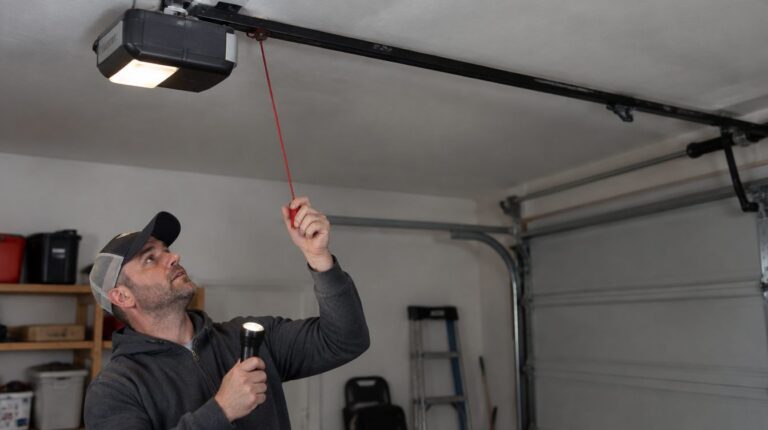
- Opener. Test the motor, chain or belt tension, trolley, and travel limits. Check the force settings so the door is not slamming or straining.
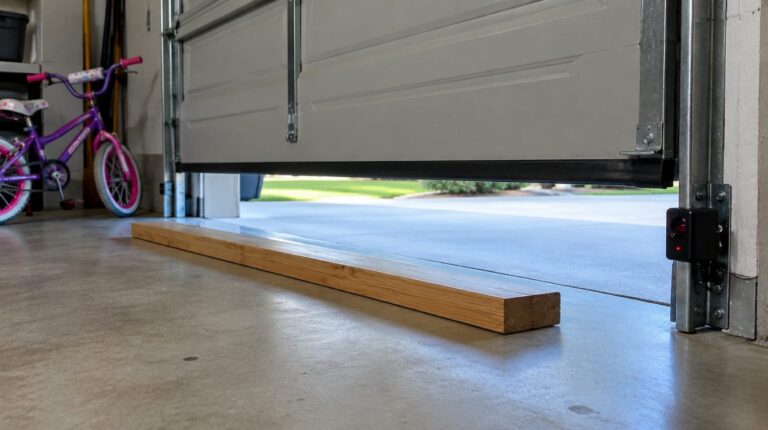
- Safety sensors and auto-reverse. Confirm the photo eyes are aligned, then test auto-reverse by placing a 2×4 flat under the door. The door must reverse on contact.
- Weather seal and panels. Inspect the bottom seal and side seals for cracking, and check panels for rust, dents, or delamination.
- Lubrication. Apply a proper garage door lubricant to springs, hinges, rollers, and bearings. Wipe tracks clean (tracks should not be lubricated).
- Hardware and fasteners. Tighten every bolt and lag screw on the door, track, and opener mount. Houston’s humidity and vibration loosen hardware faster than you would think.
At the end of the visit you should get a clear summary: what was adjusted, what is wearing, and what you can expect to need in the next year or two. If a company’s tune-up takes ten minutes, it was not a tune-up.
How often should you service a garage door in Houston?
The general industry advice is once a year. In Houston, we think that is the minimum, and for some homes it is not enough.
- Once a year for typical use (a few cycles a day, one or two vehicles). Schedule it in spring before hurricane season or in fall after the worst heat has passed.
- Twice a year for heavy use. If the door is your main entrance, you have three or more drivers, or you open it 10+ times a day, parts wear roughly twice as fast. A spring and fall tune-up keeps up with that.
- After any major storm. High wind and flying debris can knock tracks out of alignment and bend panels in ways you will not notice until the door binds.
- Immediately if something changes. A new noise, a slower opener, a door that hesitates or looks crooked. Do not wait for the annual visit.
Why Houston is harder on doors: humidity corrodes springs and cables, summer heat degrades lubricant and rubber seals, and the constant expansion and contraction of metal loosens hardware. A door that might go two years between tune-ups in Denver really does need annual attention here.
What you can check yourself between visits
You do not need to wait for a technician to keep an eye on things. Once a month, take two minutes to:
- Watch and listen to a full open-and-close cycle. Grinding, scraping, or jerky movement means something needs attention.
- Look at the sensor LEDs near the floor. Both should be solid, not blinking.
- Check that the door looks square in the opening with no daylight along one side.
- Test the auto-reverse with a board on the floor.
- Glance at the springs and cables for visible rust or fraying.
Every few months, apply garage door lubricant to hinges and rollers. Leave spring tension, cables, and anything under load to a professional.
What a garage door maintenance plan includes
Many Houston homeowners prefer to put maintenance on autopilot with an annual plan. A good maintenance plan typically includes:
- One or two scheduled tune-up visits per year, with the full checklist above.
- Lubrication and hardware tightening at every visit.
- Minor adjustments (sensor alignment, travel limits, spring tension) included at no extra charge.
- A written condition report after each visit so you can plan ahead for larger repairs.
- Priority scheduling and a discount on parts and labor if a repair is needed between visits.
- Waived or reduced service call fees for plan members.
In 2026, standalone tune-ups in the Houston area typically run $75 to $150, and annual maintenance plans usually cost in the same range per visit with the extras bundled in. Compared to a $300 emergency spring call on a Sunday, it pays for itself the first time it prevents one.
Is a tune-up worth it?
Here is the practical math. The components most likely to fail on a garage door (springs, cables, rollers, opener gear) all give warning signs before they let go. A tune-up catches those signs. The repairs that result from catching them early are small and scheduled. The repairs that result from ignoring them are larger, often urgent, and sometimes take other parts down with them (a snapped spring can throw cables and bend tracks).
A tune-up also extends the life of the door itself. Balanced springs mean the opener is not overworking, properly lubricated rollers mean the tracks are not wearing, and tight hardware means panels are not flexing at the hinges. Regular maintenance is the difference between a door that lasts 12 years and one that lasts 25.
Want to get your door on a maintenance schedule? Call 713-598-3837 (Houston) or 281-800-5387 (Clear Lake), or request a free quote.
Frequently asked questions
How long does a garage door tune-up take?
A thorough inspection and tune-up usually takes 45 minutes to an hour. If worn parts are found and you approve replacing them on the spot, add time for the repair.
Can I do my own garage door tune-up?
You can safely handle lubrication, cleaning the tracks, tightening accessible hardware, and testing the sensors and auto-reverse. Spring adjustment, cable work, and anything involving the bottom brackets should be left to a technician because those parts are under tension.
What lubricant should I use on a garage door?
A silicone-based or lithium-based garage door spray. Avoid WD-40 as a lubricant; it is a degreaser and will strip existing lubrication and attract dust.
Does a new garage door need a tune-up in the first year?
Yes. New doors settle, springs seat, and hardware loosens during the first few hundred cycles. A tune-up at the one-year mark keeps everything in spec and usually keeps the warranty in good standing.
Related guides
- Garage Door Maintenance Tips for Houston Homeowners
- How Long Do Garage Door Springs Last?
- The Risks of DIY Garage Door Repairs
Schedule a garage door inspection in Houston
BBM Garage Doors offers full inspections, tune-ups, and maintenance plans alongside same-day repair across Houston, Clear Lake, Katy, Cypress, Spring, The Woodlands, Pearland, Sugar Land, League City, Pasadena, and Friendswood. Call 713-598-3837 (Houston) or 281-800-5387 (Clear Lake), or learn more about our garage door repair services.