
When a garage door spring breaks, the first question most homeowners ask is “why now?” The door was working fine yesterday. Nothing hit it. Nobody did anything different. The answer, more often than not, is simple arithmetic: the spring reached the number of cycles it was built for, and it was always going to fail around this time.
Garage doors wear out in a surprisingly predictable way once you understand the idea of a cycle. This guide explains what a cycle is, how the standard parts are rated, which components wear out from use and which wear out from age, and what you can do to push those numbers further out.
What a garage door cycle actually is
One cycle is one full trip: the door goes up and comes back down. That’s it. Leave for work in the morning and come home at night, and that’s two cycles. Run out to the mailbox through the garage, two more.
Springs, opener motors, rollers and cables are all engineered around cycles, so the number of years they last depends entirely on how many times a day your door goes up and down.
Standard 10,000-cycle springs vs. high-cycle springs
The torsion springs installed on most residential doors in Houston are rated for about 10,000 cycles. That’s the industry standard, and it’s what most builders and most repair companies install by default because it keeps the price down.
High-cycle springs are the same type of spring made with heavier wire and a longer coil, so each cycle stresses the metal less. Common ratings are 20,000, 25,000 and 50,000 cycles. They cost more up front, but the cost per cycle is usually lower.
Here’s how that plays out for a typical Houston household:
- Standard 10,000-cycle spring: typically $180 to $400 installed for a pair
- High-cycle 20,000 to 25,000 spring: typically $250 to $500 installed for a pair
If a high-cycle set costs you $80 to $120 more and lasts twice as long, you’ve saved an entire service call down the road. For busy households it’s one of the better upgrades available, and our spring repair team can match the right spring to your door weight.
How daily use translates into years
This is where cycles become something you can actually plan around. Take a 10,000-cycle spring:
- 2 cycles per day (one car, one trip): about 13 to 14 years
- 4 cycles per day (one car, two trips, or two cars): about 7 years
- 6 cycles per day (two cars plus kids and errands): about 4 to 5 years
- 8+ cycles per day (large family, home business, garage as the main entry): about 3 years
Now think about the typical Houston suburban home in Katy, Cypress or Pearland: two working adults, the garage used as the front door, kids coming and going. Four to six cycles a day is normal, which is why we replace so many springs on doors between 5 and 10 years old. It isn’t bad luck or bad parts. It’s the math.
Key takeaway: Count how many times your door moves in a normal day. If it’s four or more, expect standard springs to last about 7 years, and consider high-cycle springs at the next replacement.
Parts that wear by cycle vs. parts that wear by time
Not everything on your door is a cycle part. Some components fail because of use, others because of age and environment, and in Houston the environment matters a lot.
Wear by cycle (use-driven):
- Torsion and extension springs. The clearest cycle part. Every lift flexes the steel, and the steel has a finite number of flexes.
- Rollers. Nylon rollers with sealed bearings typically last 10,000 to 15,000 cycles; cheap plastic or unsealed steel rollers wear much faster and get loud.
- Opener motor and gear. Most residential openers are built for a similar cycle range to standard springs. The plastic drive gear in chain-drive units is a common cycle casualty.
- Cables. Each cycle winds and unwinds the cable on the drum. Over time the strands fatigue at the same bend point.
Wear by time and environment (age-driven):
- Rust and corrosion. Houston humidity attacks springs, cables and bottom brackets whether the door moves or not. A rusty spring fails before its rated cycle count.
- Weather seals. Rubber dries, cracks and shrinks with sun and heat exposure.
- Opener electronics. Capacitors and logic boards degrade with heat and age, not with use. An opener in a hot Houston garage can fail at 8 to 10 years even on a lightly used door.
This is why a vacation home in Galveston that’s barely used can still need springs and cables: the salt air does the work the cycles would have done.
How to extend the life of your garage door
You can’t change how many times you drive to work, but you can change how much stress each cycle puts on the parts.
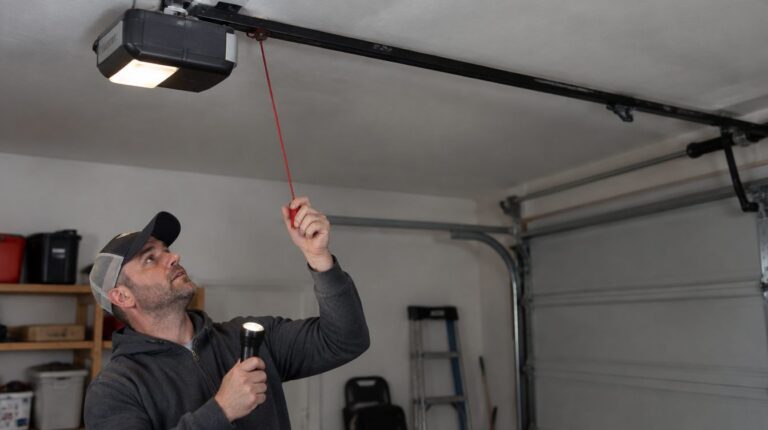
- Keep the door balanced. Disengage the opener and lift the door halfway by hand. If it stays, it’s balanced. If it drifts up or down, the springs are off and the opener is doing extra work on every cycle, wearing out both. Have it adjusted.
- Lubricate every three to four months. Springs, rollers, hinges and bearings. In Houston’s humidity this also slows the rust that shortens spring life.
- Upgrade rollers. Swapping worn steel or plastic rollers for sealed nylon rollers reduces friction, noise and opener strain. It’s an inexpensive upgrade that often gets done at the same time as a spring replacement.
- Choose high-cycle springs when it’s time to replace. Especially if your household runs four or more cycles a day.
- Replace springs in pairs. If one spring on a two-spring door breaks, the other has the same cycle count on it. Replacing both saves a second service call within months.
- Fix small problems early. A loud or shaky door is putting extra load on every other part.
Want to know where your door stands? Call 713-598-3837 (Houston) or 281-800-5387 (Clear Lake), or request a free quote.
What this means for repair vs. replace decisions
Understanding cycles also helps with the bigger question of when to stop repairing and start over. A 20-year-old door that’s on its third set of springs, with worn rollers, tired cables and an opener from the same era, has every cycle part at or near end of life at the same time. Replacing them one at a time can cost more over two years than a new door and opener would. Most homeowners in Houston pay $1,200 to $2,800 for a standard new double door installed, and the full cost breakdown is in our pricing guide.
Frequently asked questions
How do I know how many cycles my springs are rated for?
Most homeowners don’t, because builders rarely document it. If the springs came with the house from a production builder, assume 10,000 cycles. A technician can measure the wire size and coil length and tell you the rating.
Can a spring break early, before 10,000 cycles?
Yes, and in Houston it’s common. Rust, an unbalanced door, a spring that was slightly undersized for the door weight, or a cold snap can all cause early failure.
Do high-cycle springs make the door heavier or harder to operate?
No. They’re sized to the same door weight; they’re just built from heavier wire so each cycle stresses the metal less. The door feels the same.
Is it worth replacing rollers and cables when I replace the springs?
Usually, especially if the door is 7 years or older. Those parts have the same cycle count as the springs, and doing them together is cheaper than separate visits.
Related guides
- How Long Do Garage Door Springs Last?
- Garage Door Spring Repair Cost
- Garage Door Maintenance Tips for Houston Homeowners
Get same-day garage door repair in Houston
Whether your springs just hit their cycle limit or you want to upgrade to high-cycle parts before they do, BBM Garage Doors offers same-day and 24/7 emergency service across Houston, Katy, Cypress, Spring, The Woodlands, Pearland, Sugar Land, League City, Clear Lake, Pasadena, Friendswood, Missouri City and Galveston. Call 713-598-3837 (Houston) or 281-800-5387 (Clear Lake), or learn more about our garage door repair services.